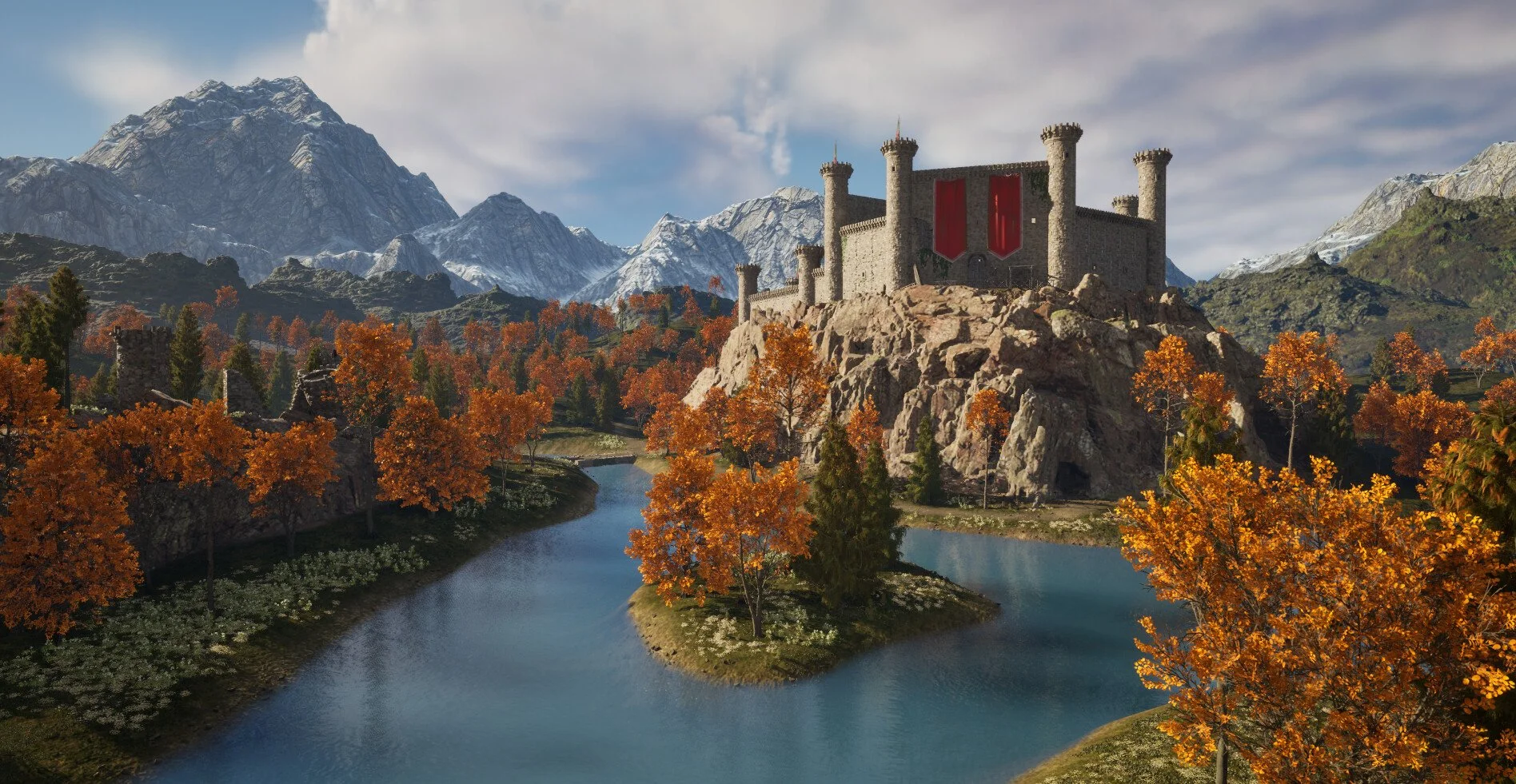
This project highlights my ability to build engaging game environments by combining technical implementation with artistic composition. Through terrain shaping, landscape texturing, and thoughtful asset placement, I created a world that feels both immersive and visually appealing while supporting gameplay and exploration. The workflow reflects common responsibilities of an Environment Artist and Level Artist, where terrain creation, asset integration, and environmental storytelling come together to create memorable player experiences.
3D Environment Design - Terrain Sculpting & Landscape Development
GAME ENGINE
Unreal Engine
MY ROLE
3D Environmental Artist
MY ENVIRONMENT ART WORK & TECHNIQUES
Terrain sculpting and elevation design
Landscape material creation and terrain layer painting
Material and texture blending
Environmental asset integration and customization
Foliage and prop placement for environmental composition
Terrain optimization, visual polish, and scene dressing/world-building
ABOUT THE ENVIRONMENT
This 3D Environment Design project focused on creating a visually compelling and immersive outdoor game environment through terrain development, asset integration, and landscape texturing. Built using industry-standard environment art workflows, the scene demonstrates the process of transforming a collection of assets into a cohesive and believable game world.
A key aspect of this project involved integrating and customizing existing environmental assets to establish a strong visual identity while maintaining consistency throughout the environment. Careful asset placement, composition, and environmental storytelling were used to create natural points of interest and guide the player's eye through the scene.
The terrain was sculpted and refined using elevation tools to create realistic landforms, varied topography, and natural transitions between different areas of the environment. Hills, slopes, and landscape features were strategically shaped to add depth, improve visual interest, and support level design objectives.
Landscape texturing played a significant role in achieving realism and environmental variety. Multiple terrain layers were blended to create natural transitions between grass, soil, rock, and other surface materials. Attention was given to texture distribution, scale, and material blending to ensure the environment felt cohesive and believable from both close-up and distant viewpoints.
GALLERY
The following images showcase my process and illustrate how the project evolved into the final result.
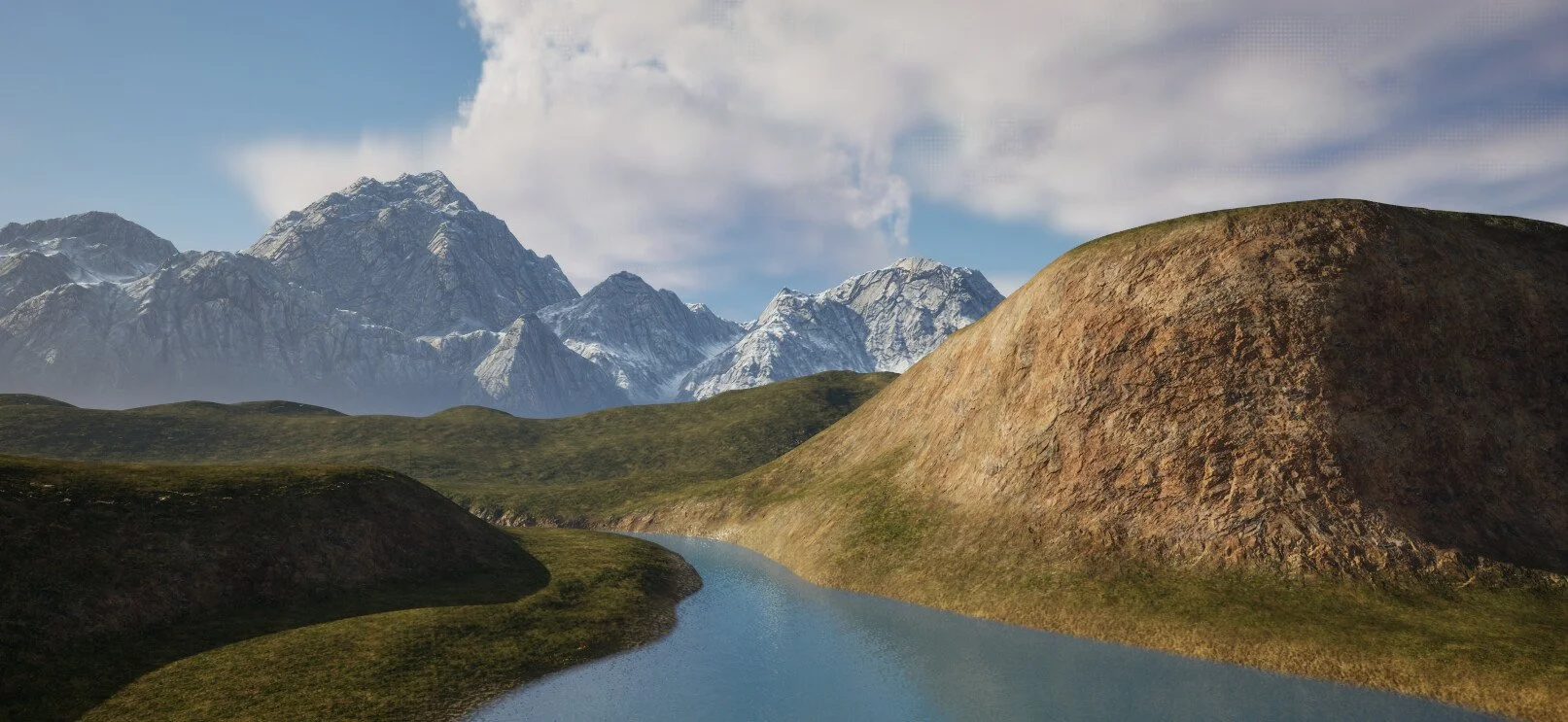
This image highlights the foundation of the environment design, establishing the terrain layout, composition, and visual direction that guided the project's evolution.
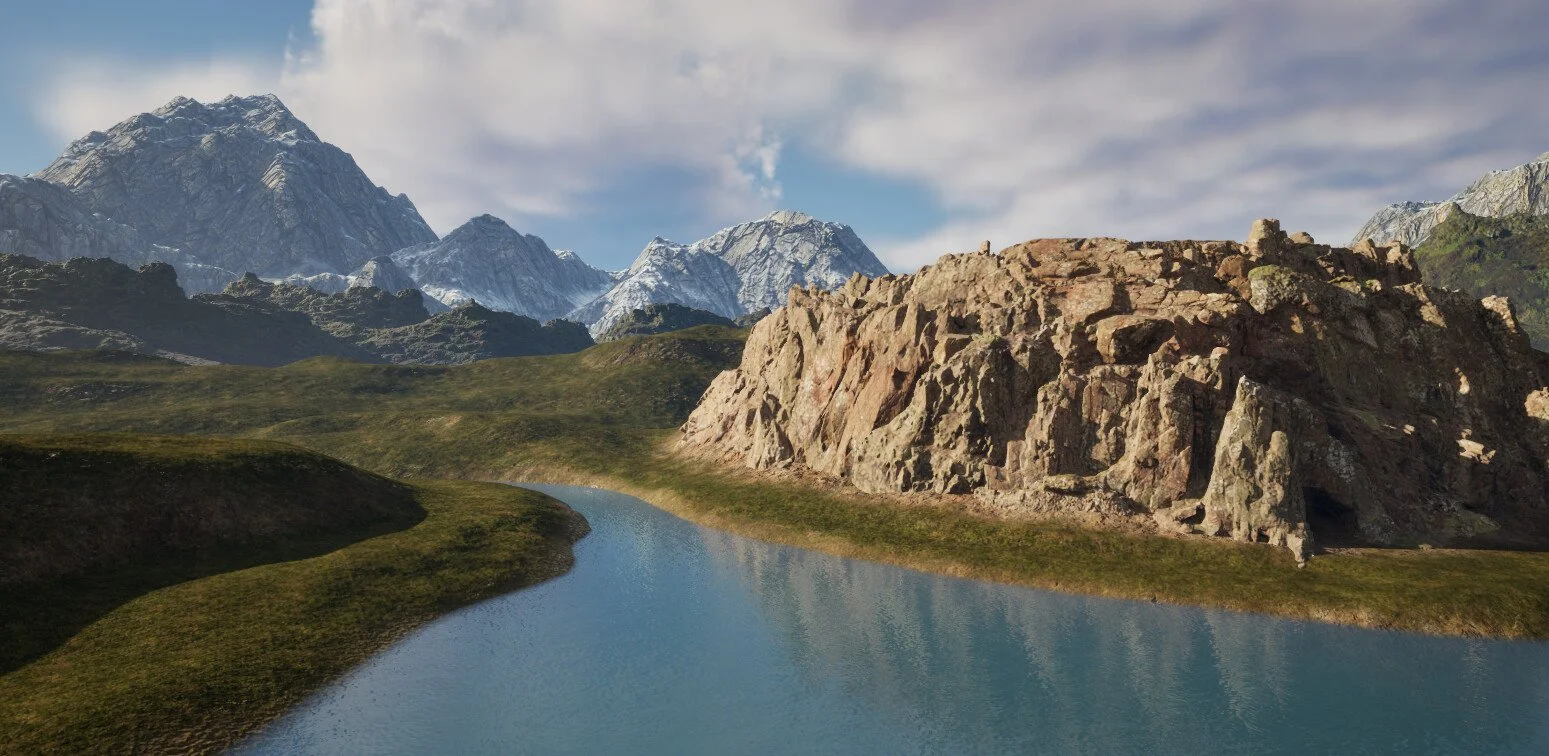
This image adds background hills to blend the foreground with the mountains and gives the main cliff a more realistic rocky look.
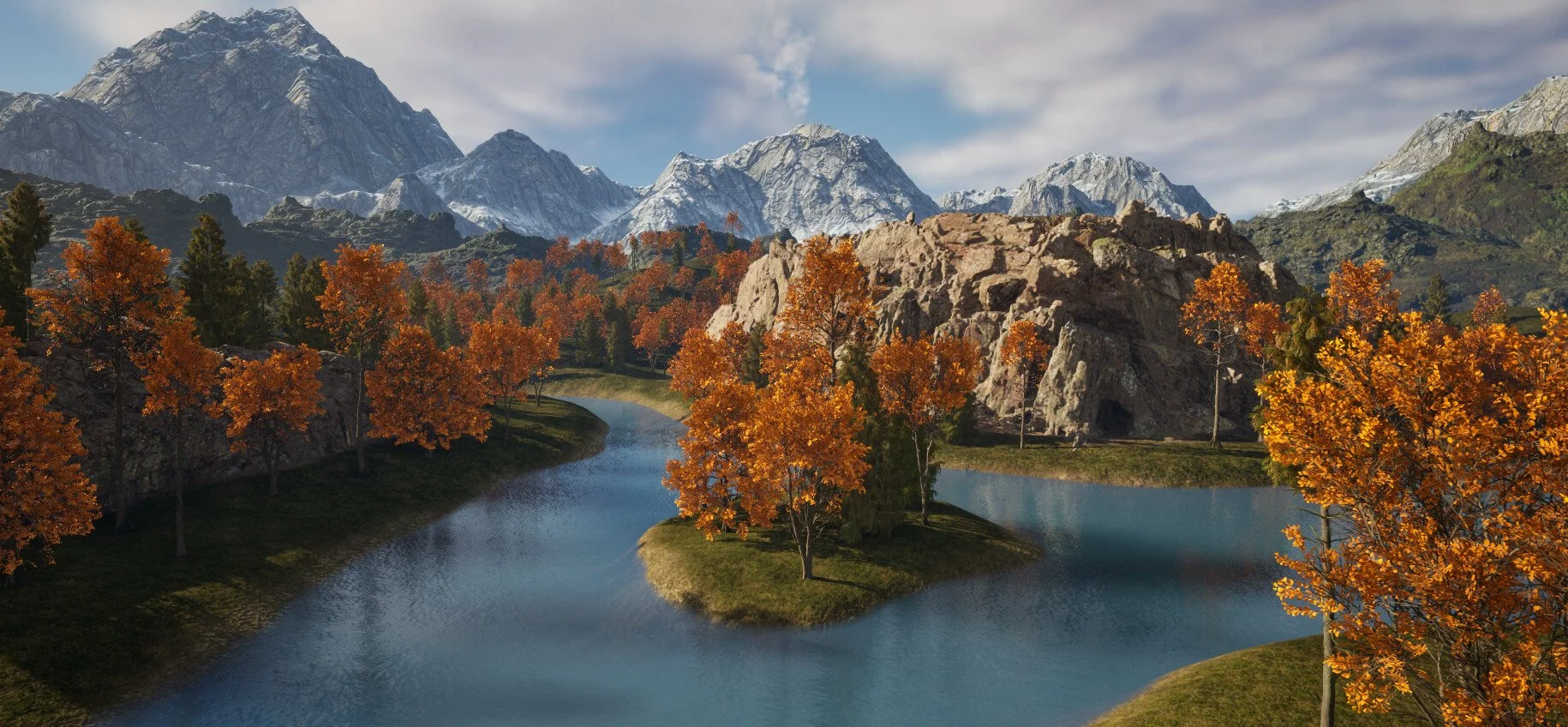
This stage introduces the first pass of foliage, adding spruce and black alder trees to bring greater depth and natural variation to the environment. A small island was also added to the lake, helping create a more visually engaging focal point and giving the water feature a stronger sense of life and character.
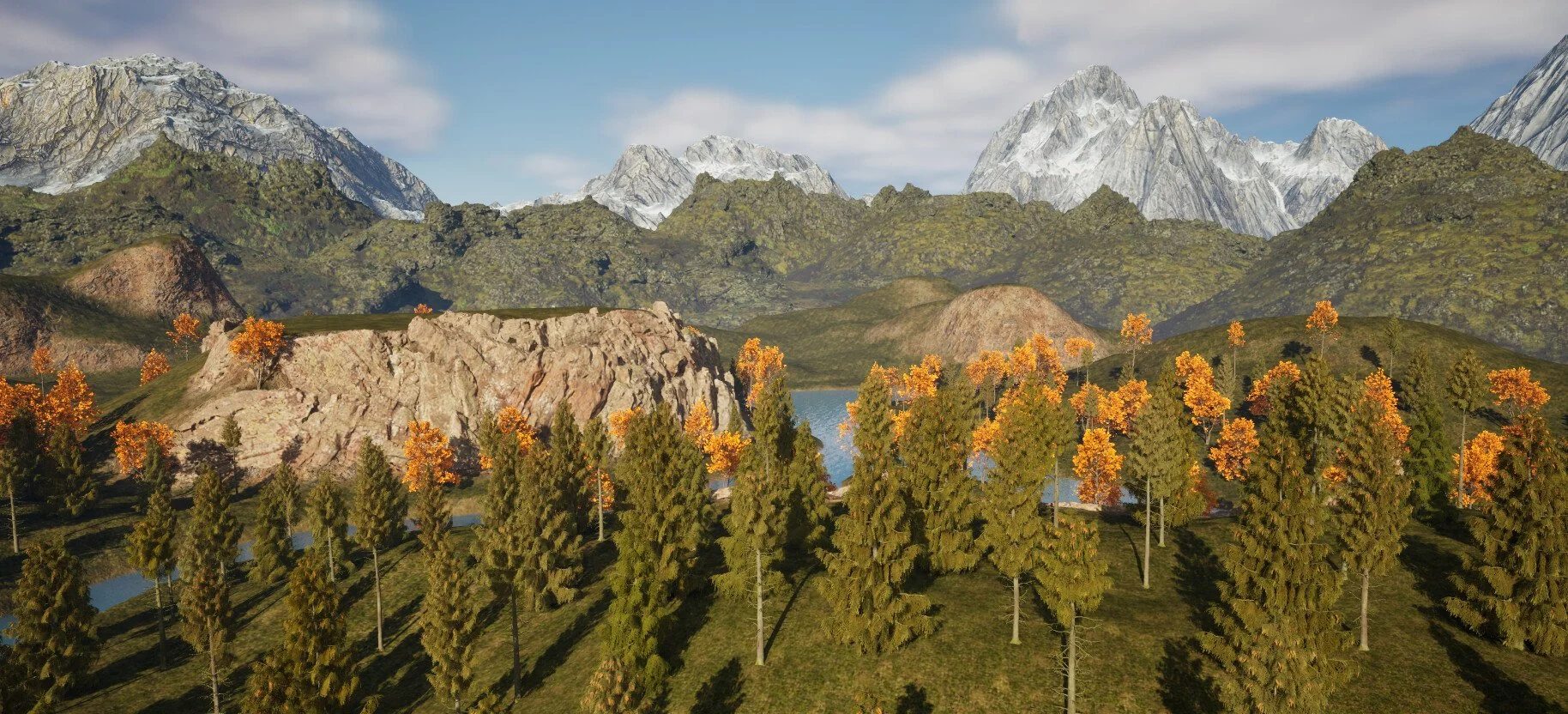
This view highlights the growing density of the forest, with clusters of spruce trees helping to establish the scale and atmosphere of the environment. The prominent cliff formation serves as the planned location for future castle ruins, hinting at the area's history while creating a strong visual focal point within the landscape.
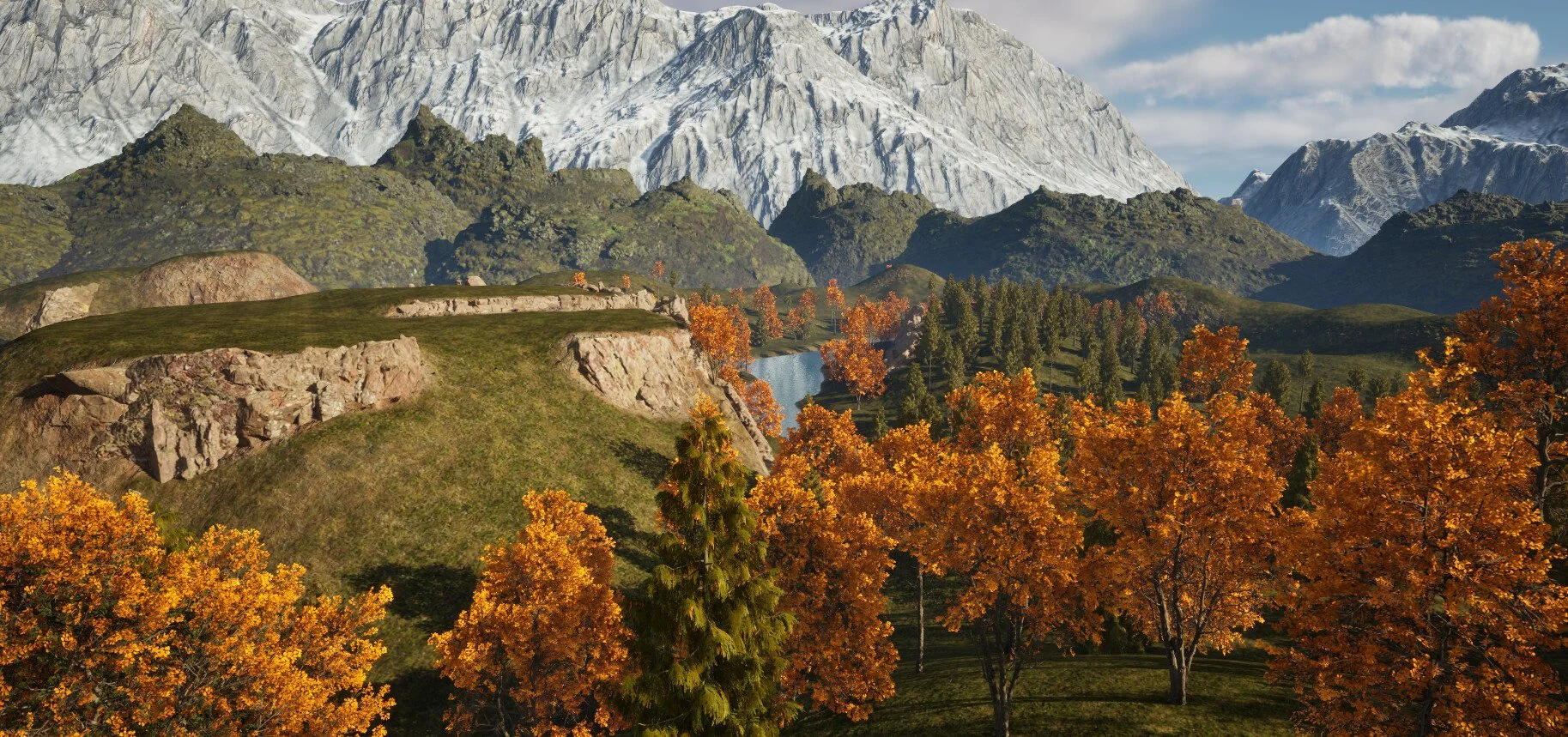
This view showcases the opposite side of the main cliff, featuring a ramp that leads to the planned castle entrance. The composition highlights the terrain layout, surrounding river, and autumn landscape that help guide the player's path through the environment.
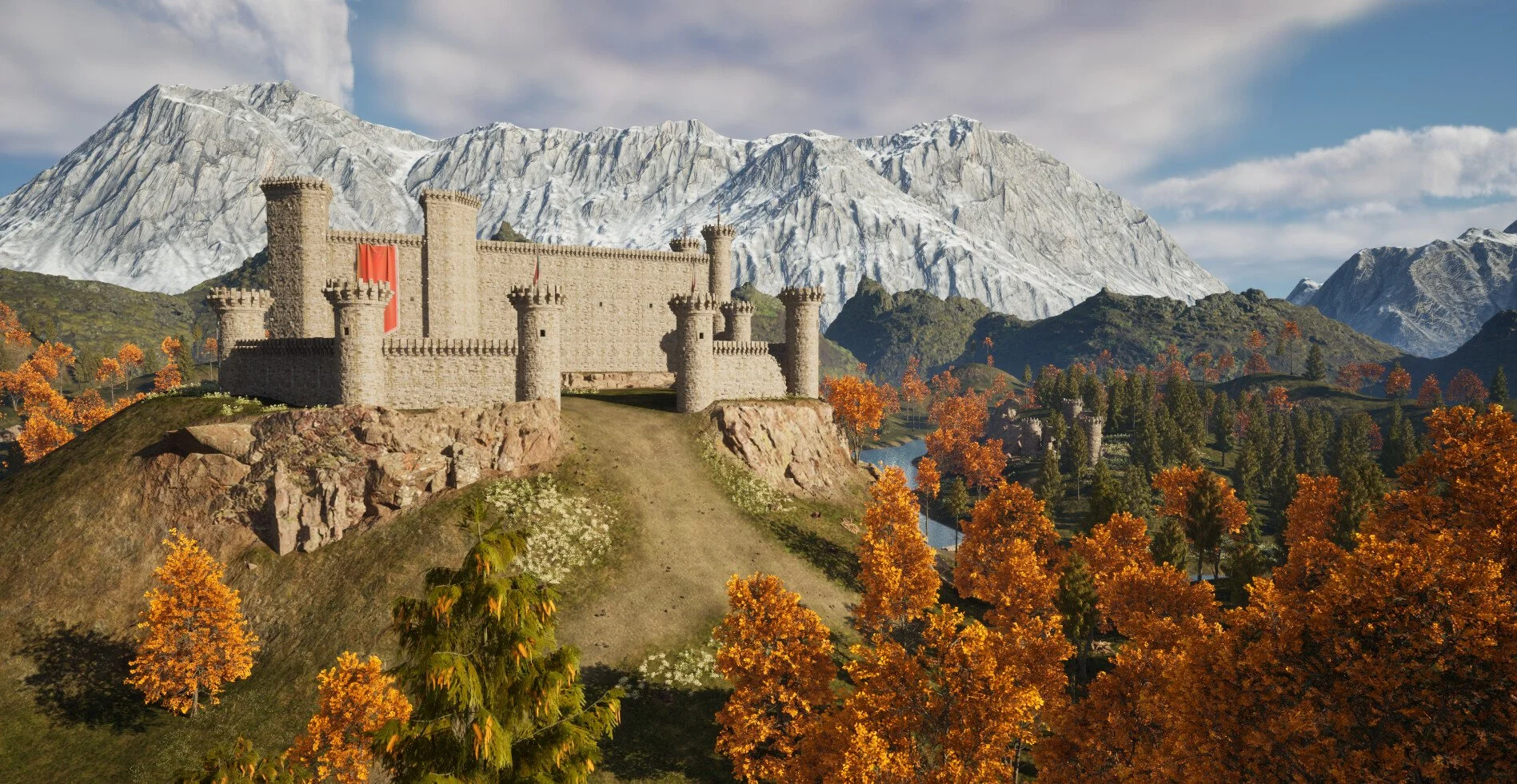
This view showcases the back-view of the newly added castle and the winding dirt road leading to its entrance. Additional foliage and clusters of spruce trees were placed along the left side of the road, helping to frame the approach and blend it naturally into the surrounding landscape. Together, these additions strengthen the scene's sense of scale and purpose while establishing the castle as a prominent focal point within the environment.
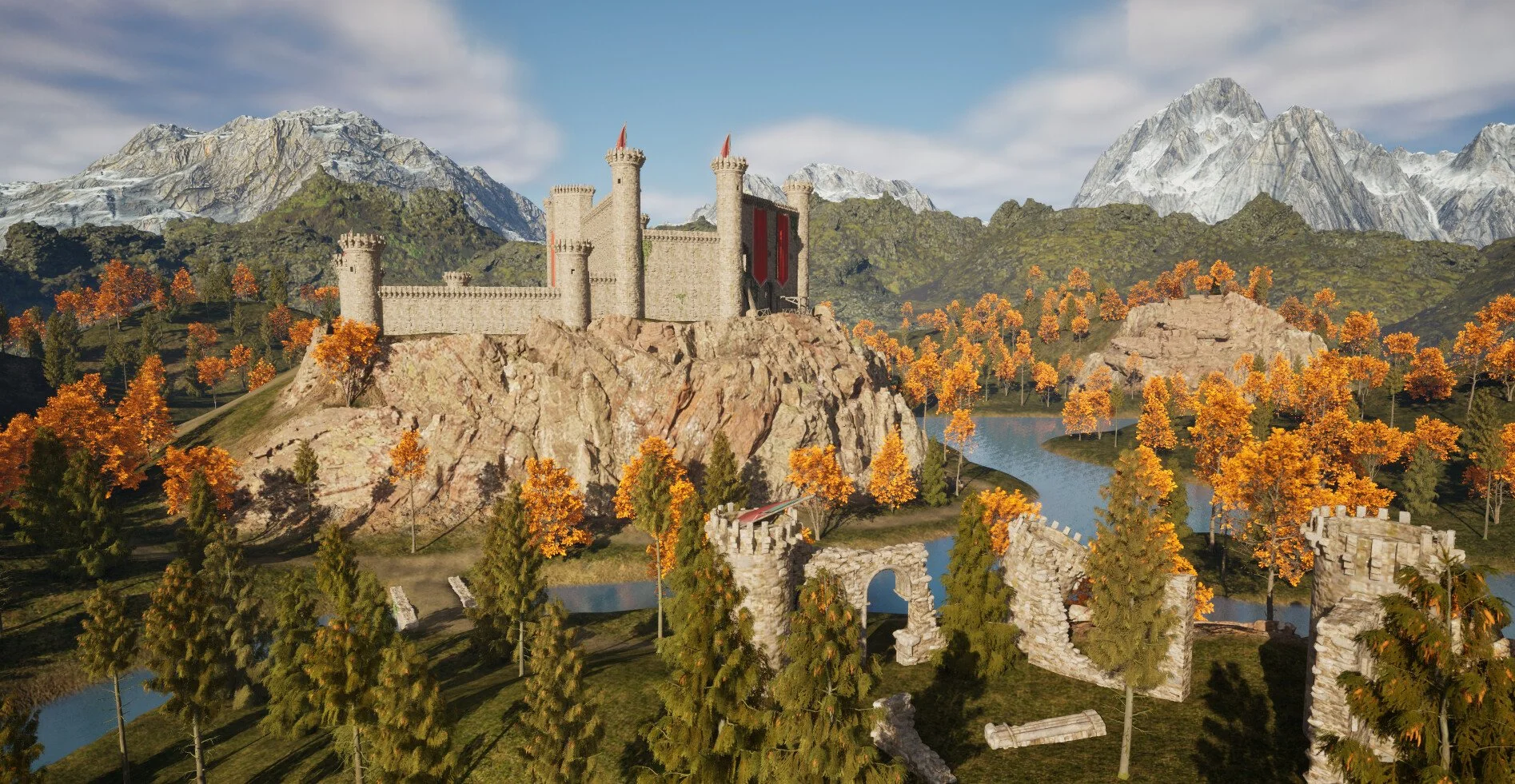
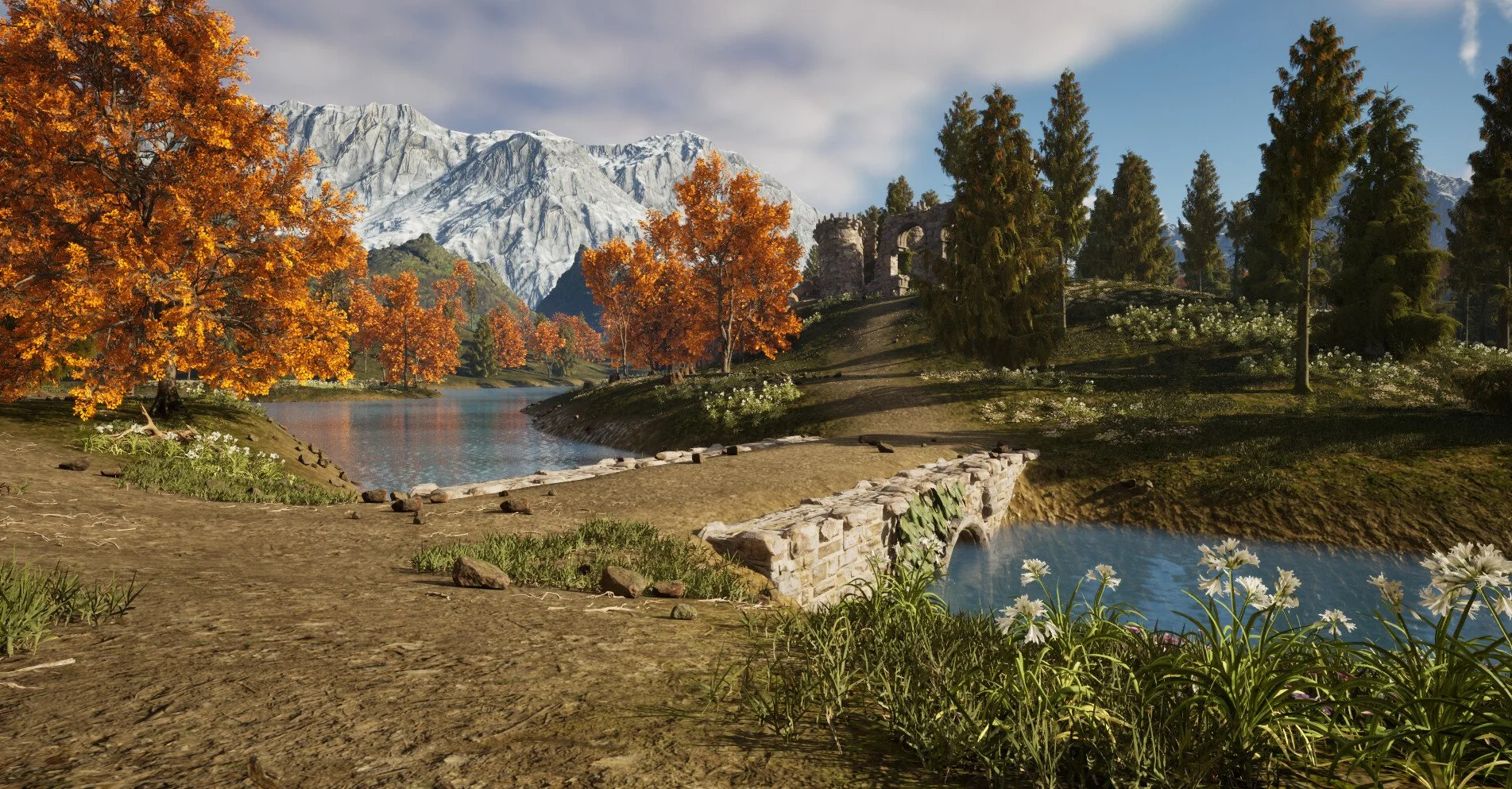
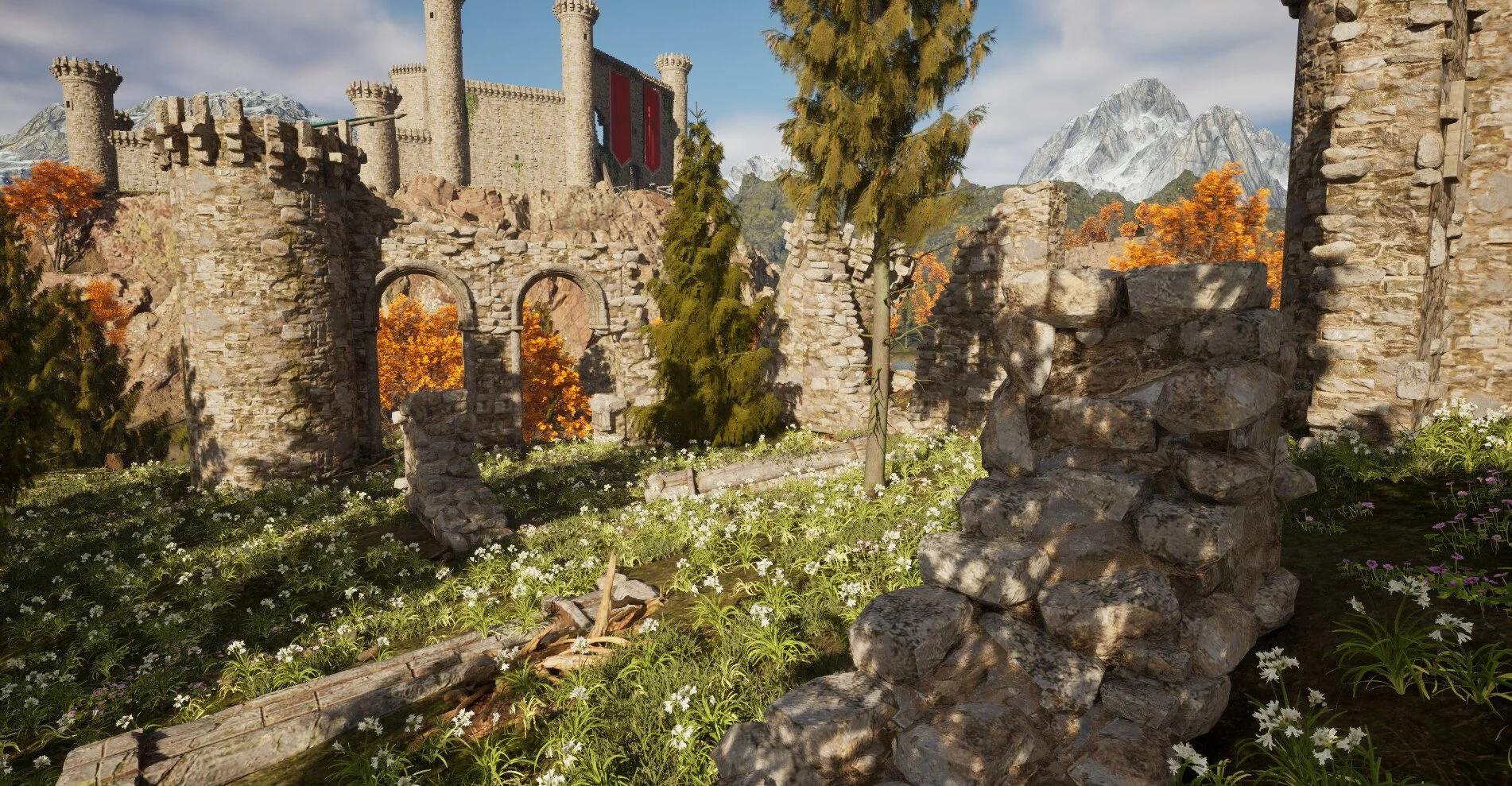
This view highlights a side perspective of the castle, offering a closer look at the newly added ruins and their weathered structure. A bridge has also been introduced, connecting the terrain to the castle ruins and improving the sense of access, depth, and environmental storytelling within the scene.
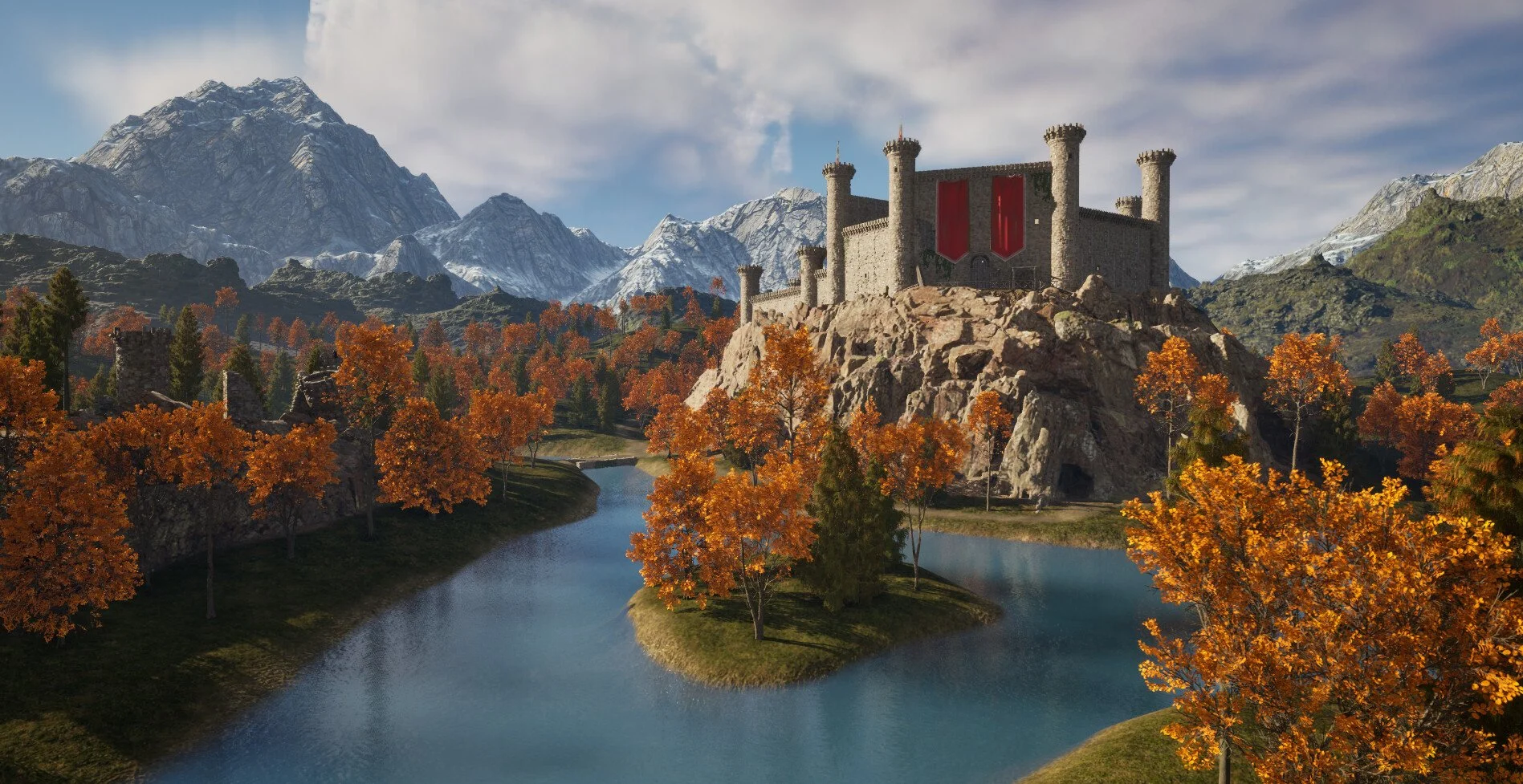
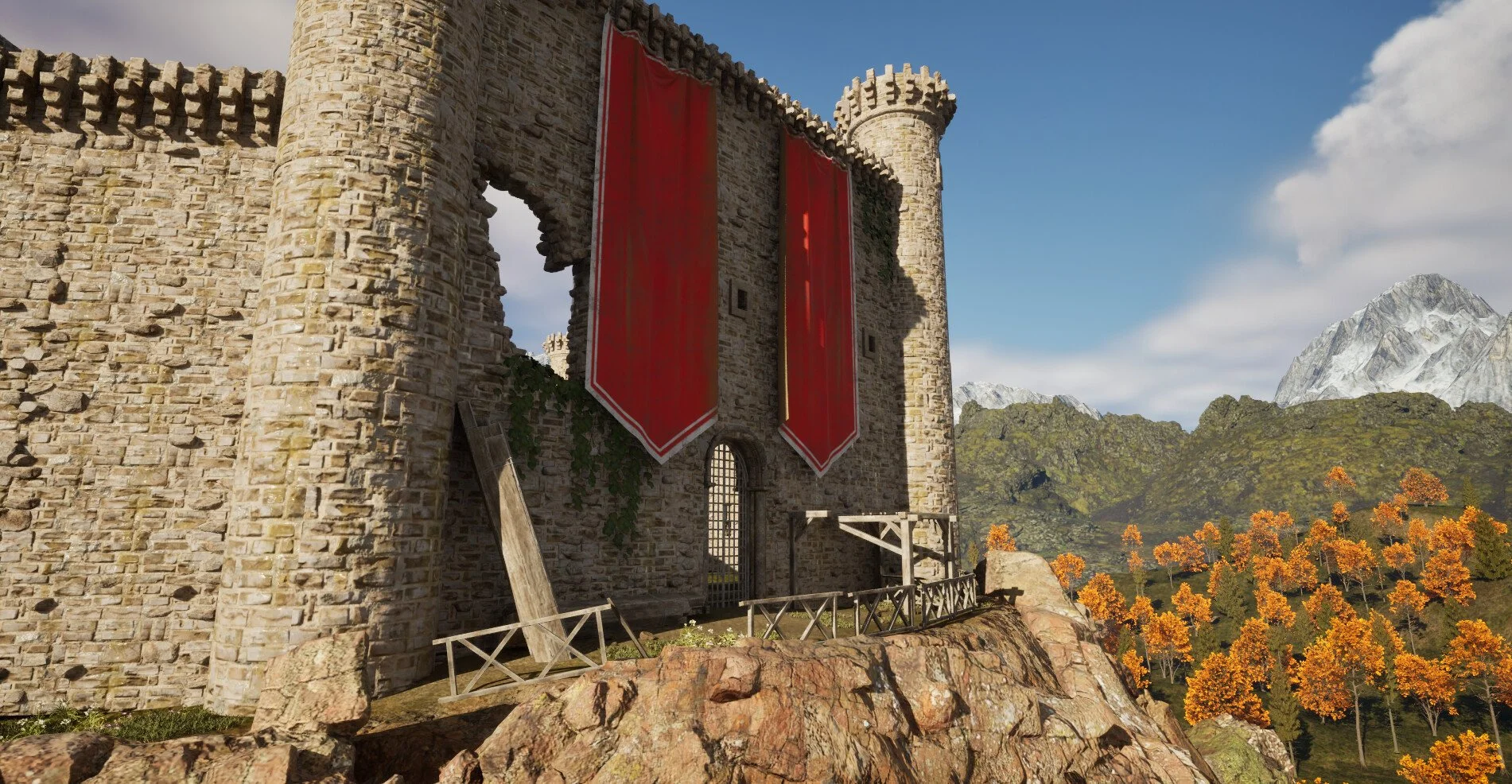
This is a front-facing view of the castle, highlighting the surrounding ruins and the bridge that connects them to the main structure. The composition emphasizes the relationship between the architectural remnants and the castle, helping to establish scale, depth, and a stronger sense of environmental storytelling.
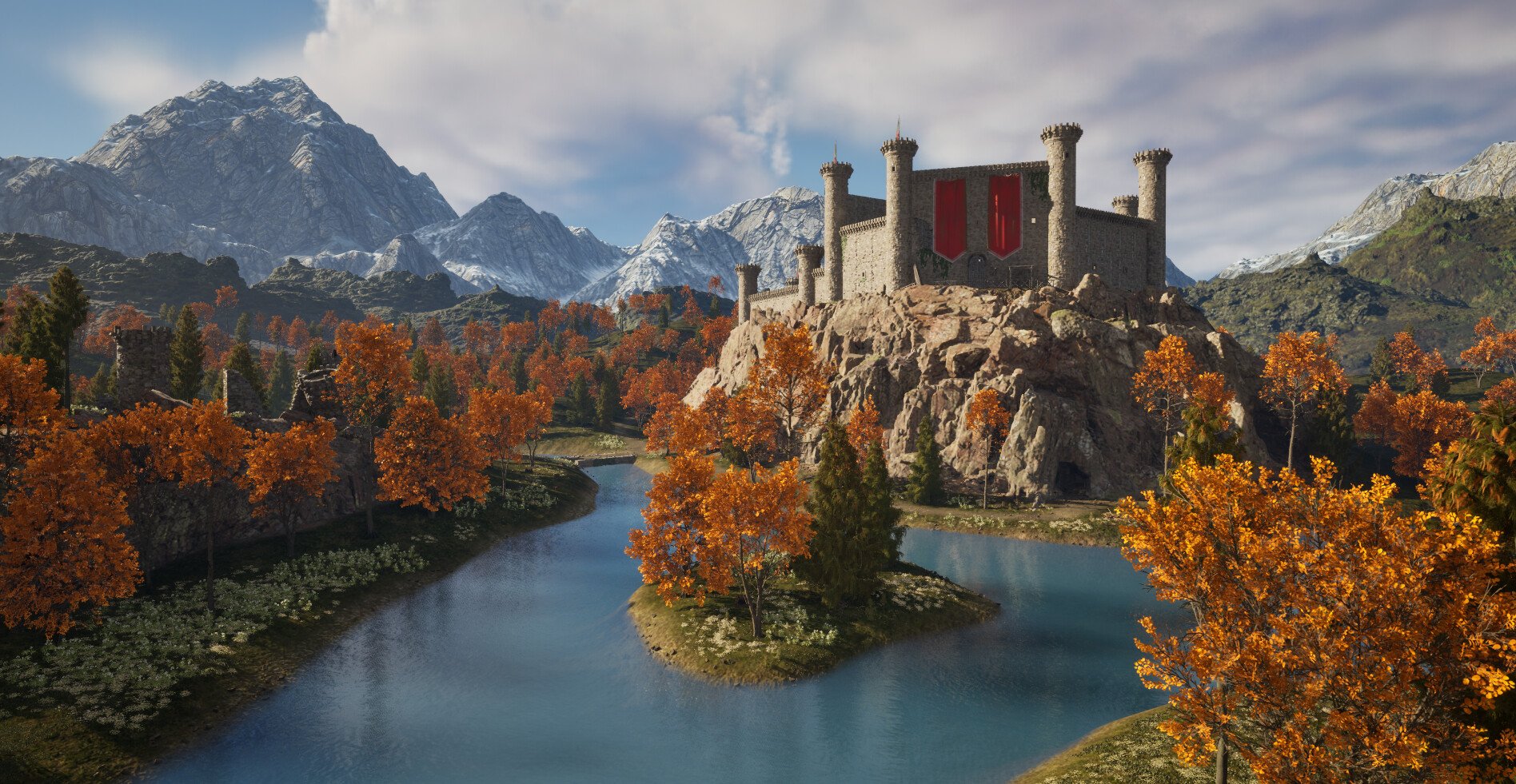
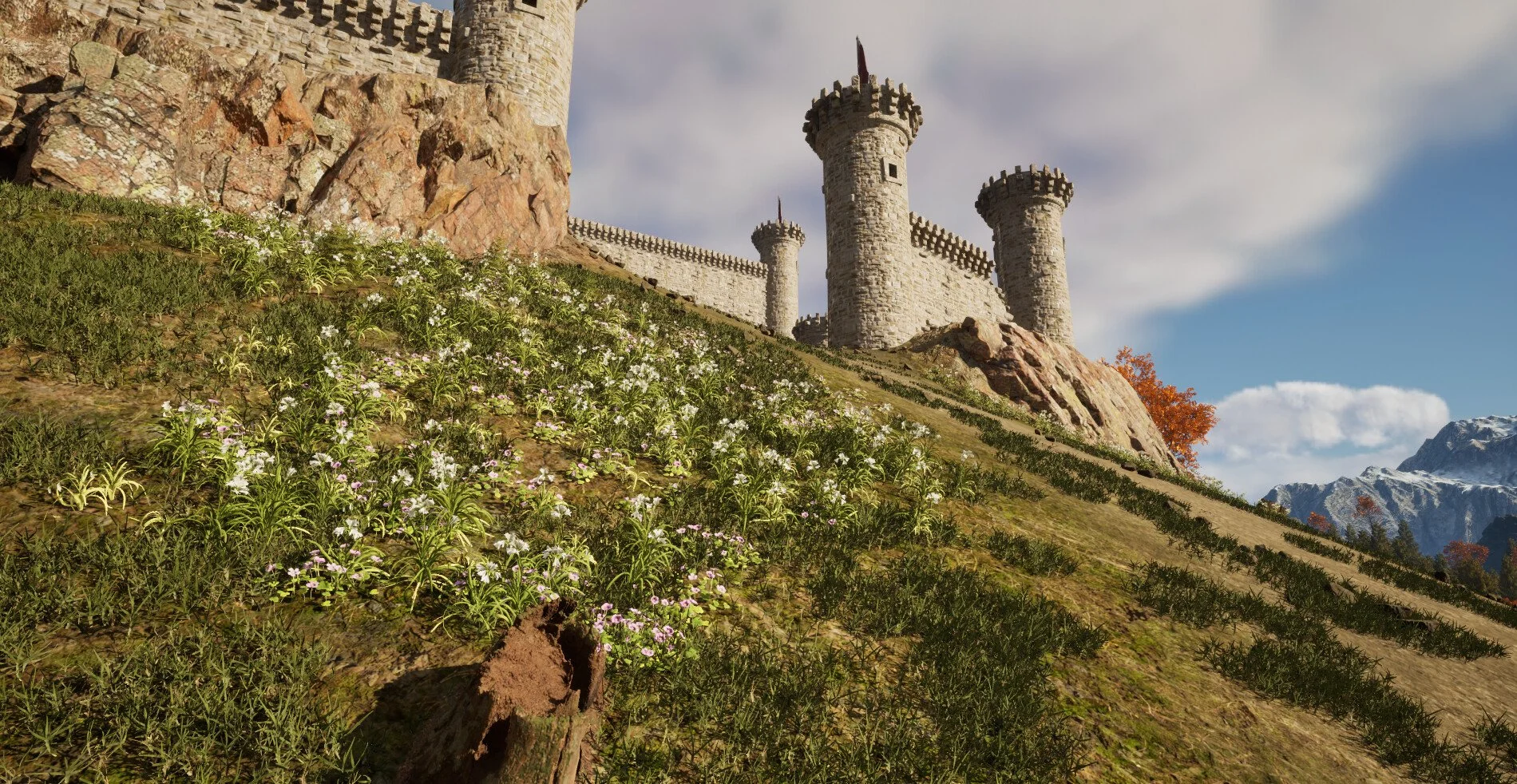
The final composition showcases the completed environment, enriched with detailed foliage elements including flowers, clovers, ferns, rocks, tree stumps, and layered grass. These additions enhance the scene’s natural density, improve visual variety, and help unify the environment with a more immersive and organic feel.
A CLOSER LOOK
Additional close-up views highlighting key environmental elements, providing a more detailed look at important assets and surface details within the scene.